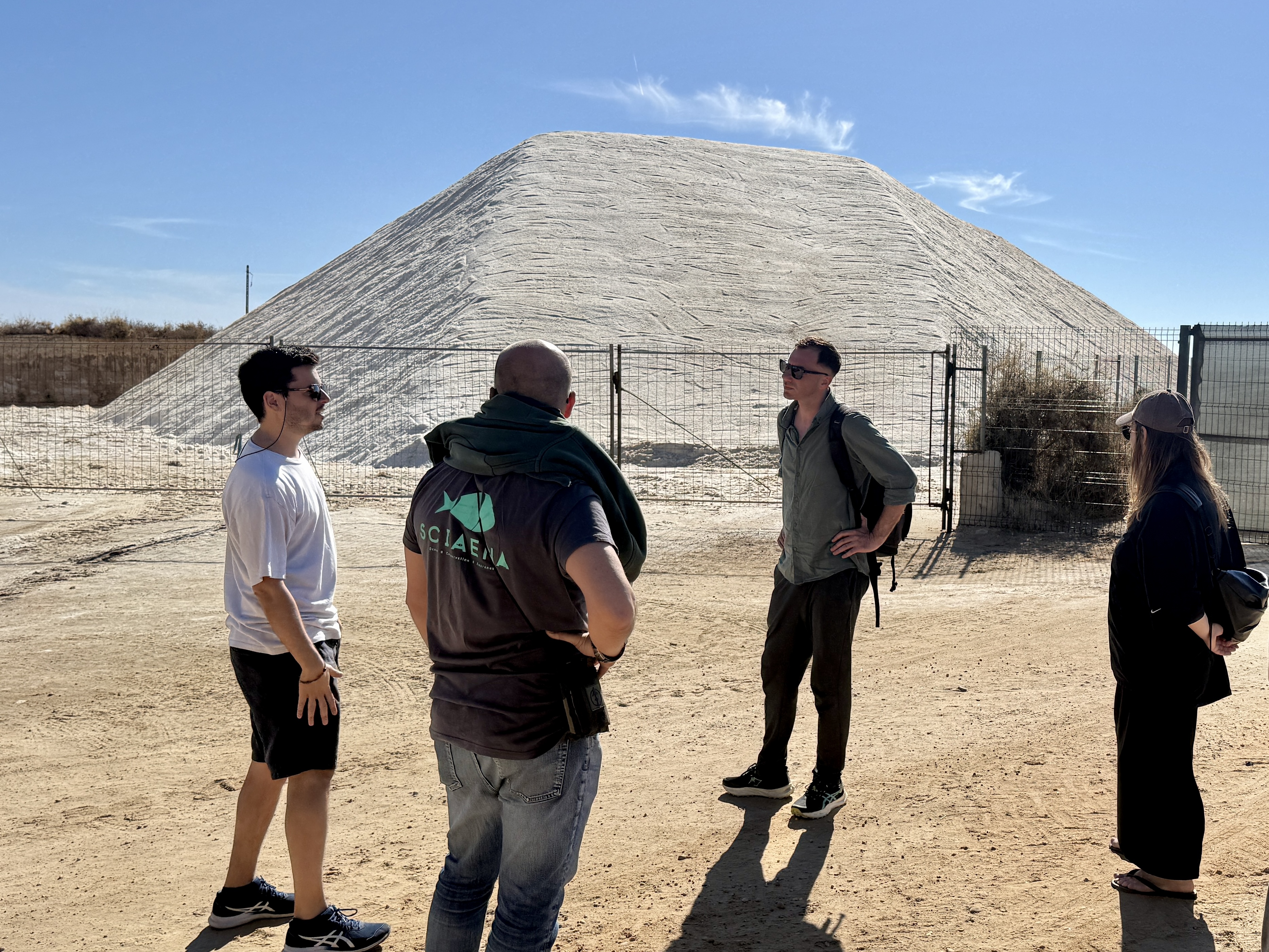
Sciaena welcomed the two artists selected for the ARES project, Polina Choni and Cristian Vaduva, to Faro for an artistic residency that took place from 26 October to 13 November 2026.
The main aim of the residency was to introduce the artists to the Ria Formosa, an ecosystem of great ecological importance and rich biodiversity, which nevertheless faces several ongoing pressures and threats that may compromise its conservation. Throughout the three weeks, a range of activities and experiences were organised to help the artists discover not only the natural richness of this area, but also the challenges it faces, the activities that take place there and the communities that depend on it.
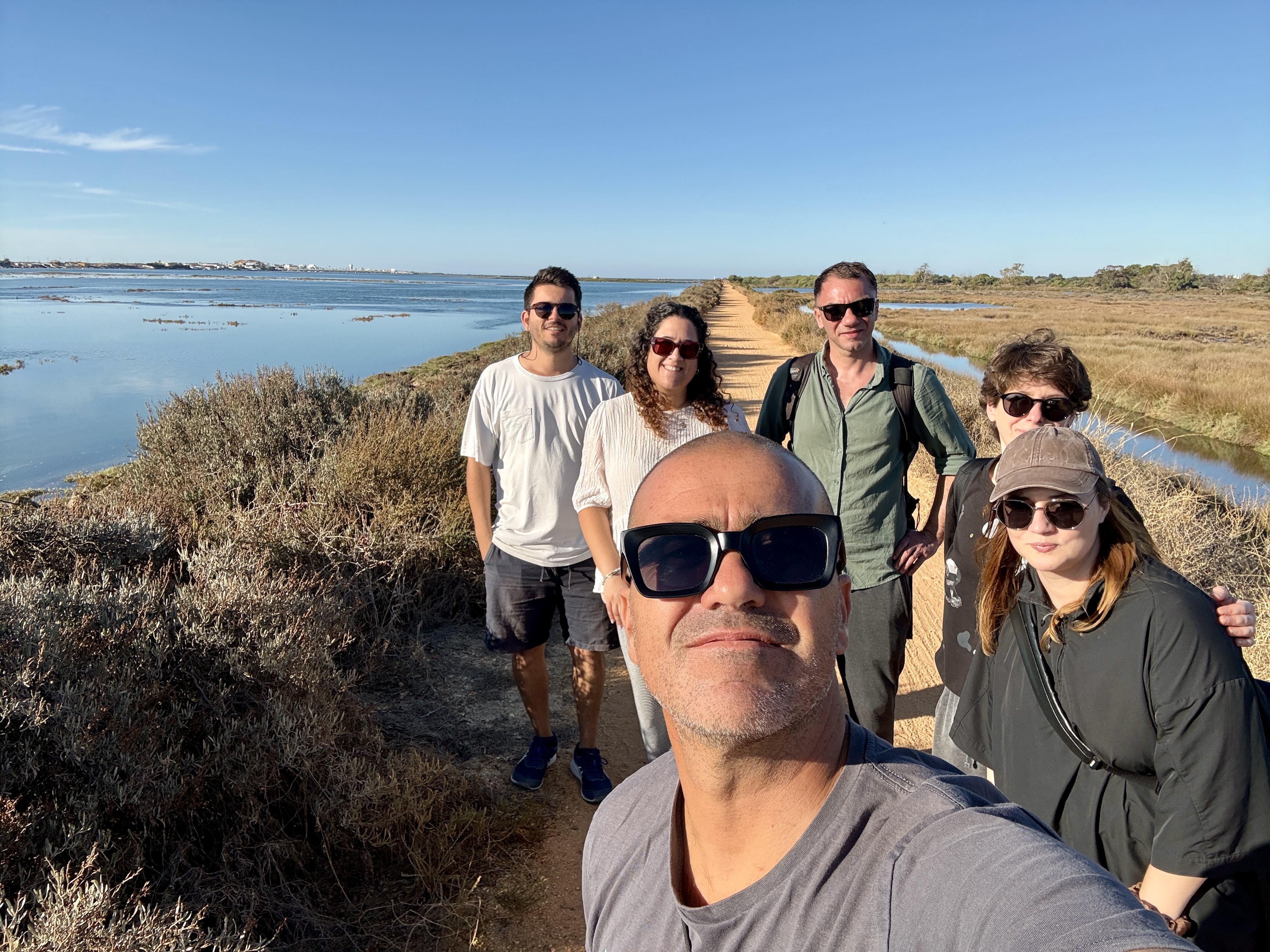
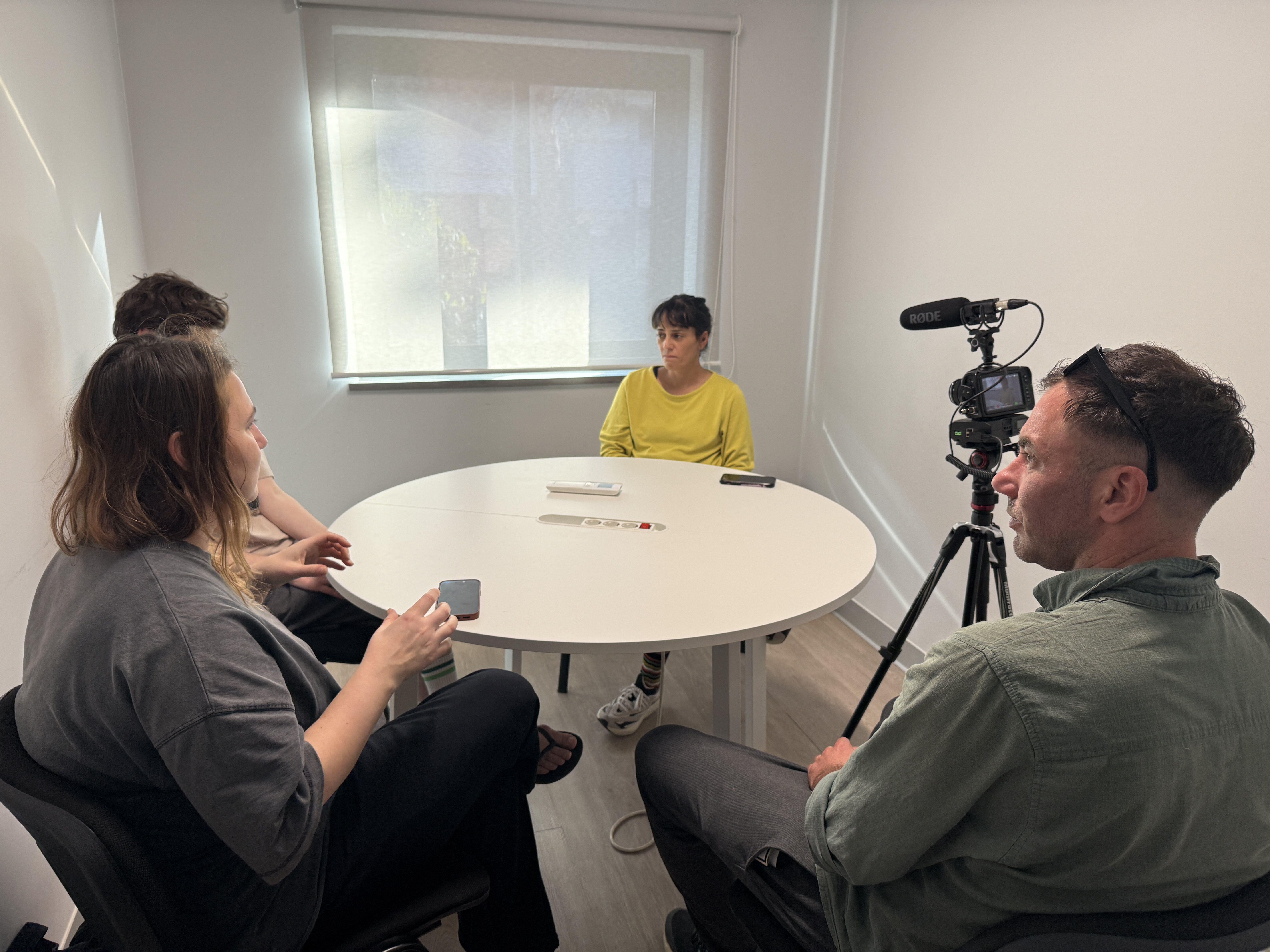
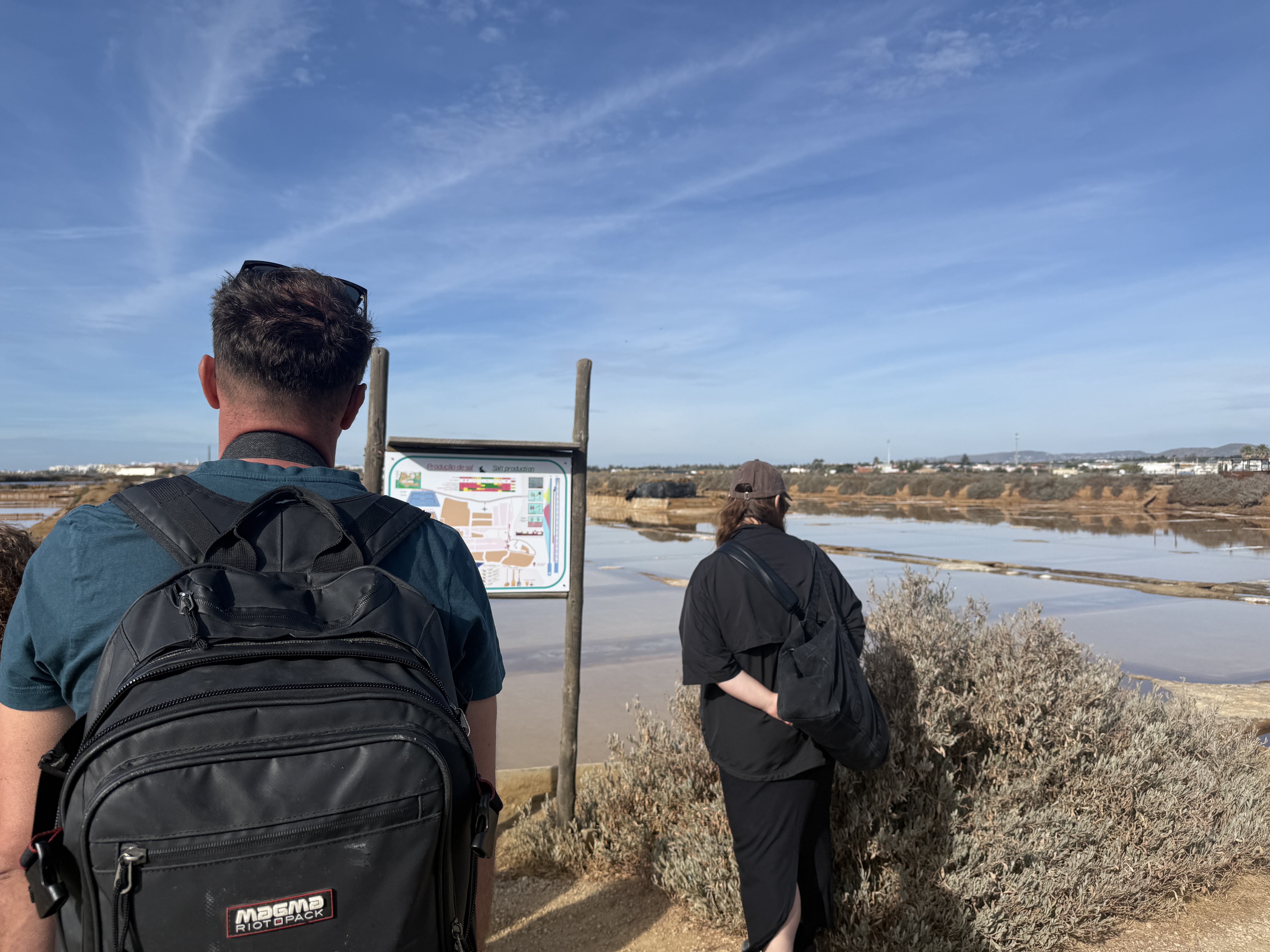
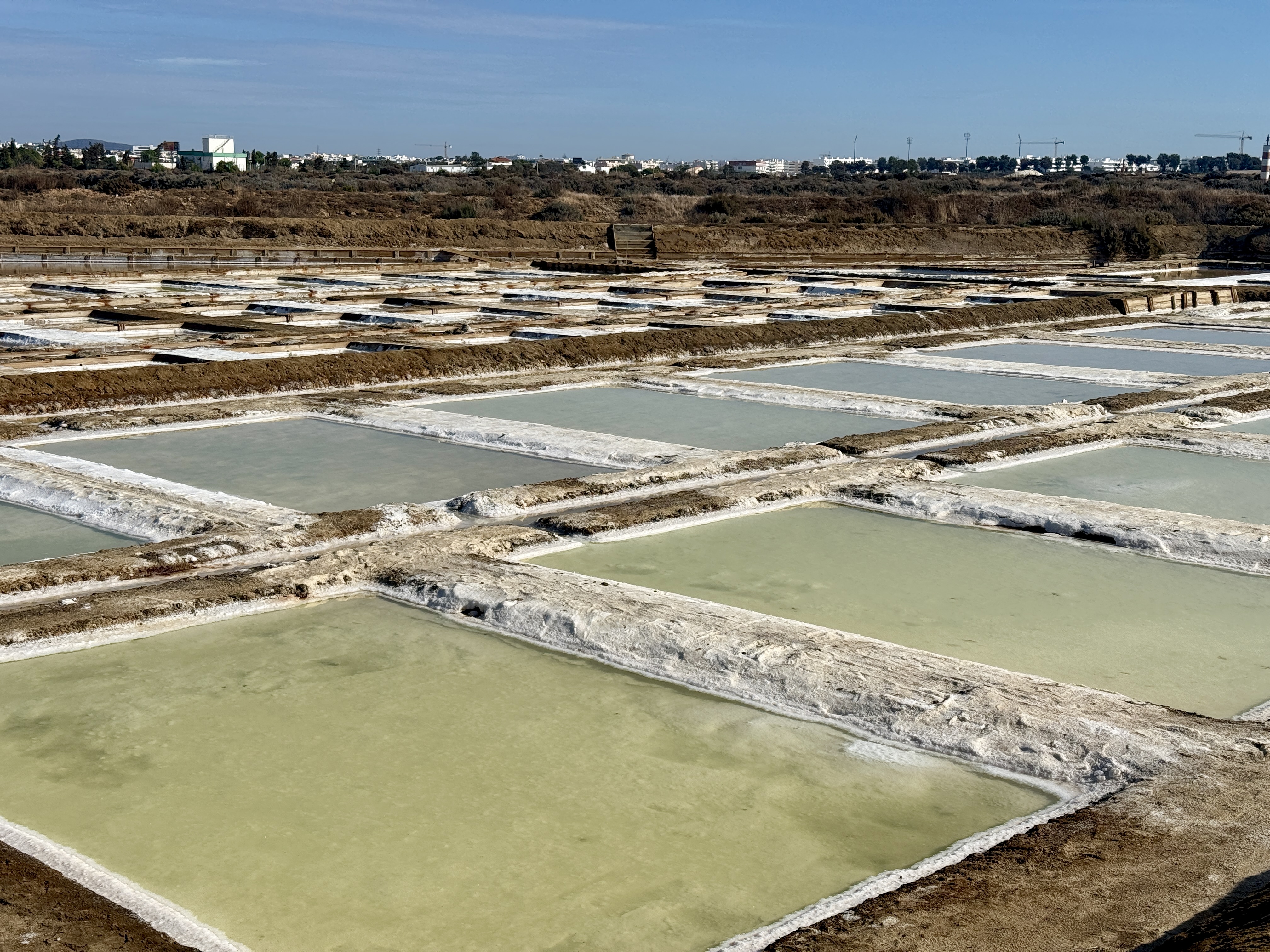
The programme began on 28 October with a meeting between the artists and the Sciaena team, during which they had the opportunity to learn more about the organisation’s work, the projects it is involved in and its main areas of activity. This first meeting also provided an introduction to the importance of the Ria Formosa and the challenges involved in conserving its ecosystems. This was followed by a walk through the Ancão salt marshes, starting at the Faro Salt Pans and continuing along Caminho do Sol and through part of the Ludo area. The walk allowed the artists to observe the landscape and some of the habitats that characterise the Ria up close.
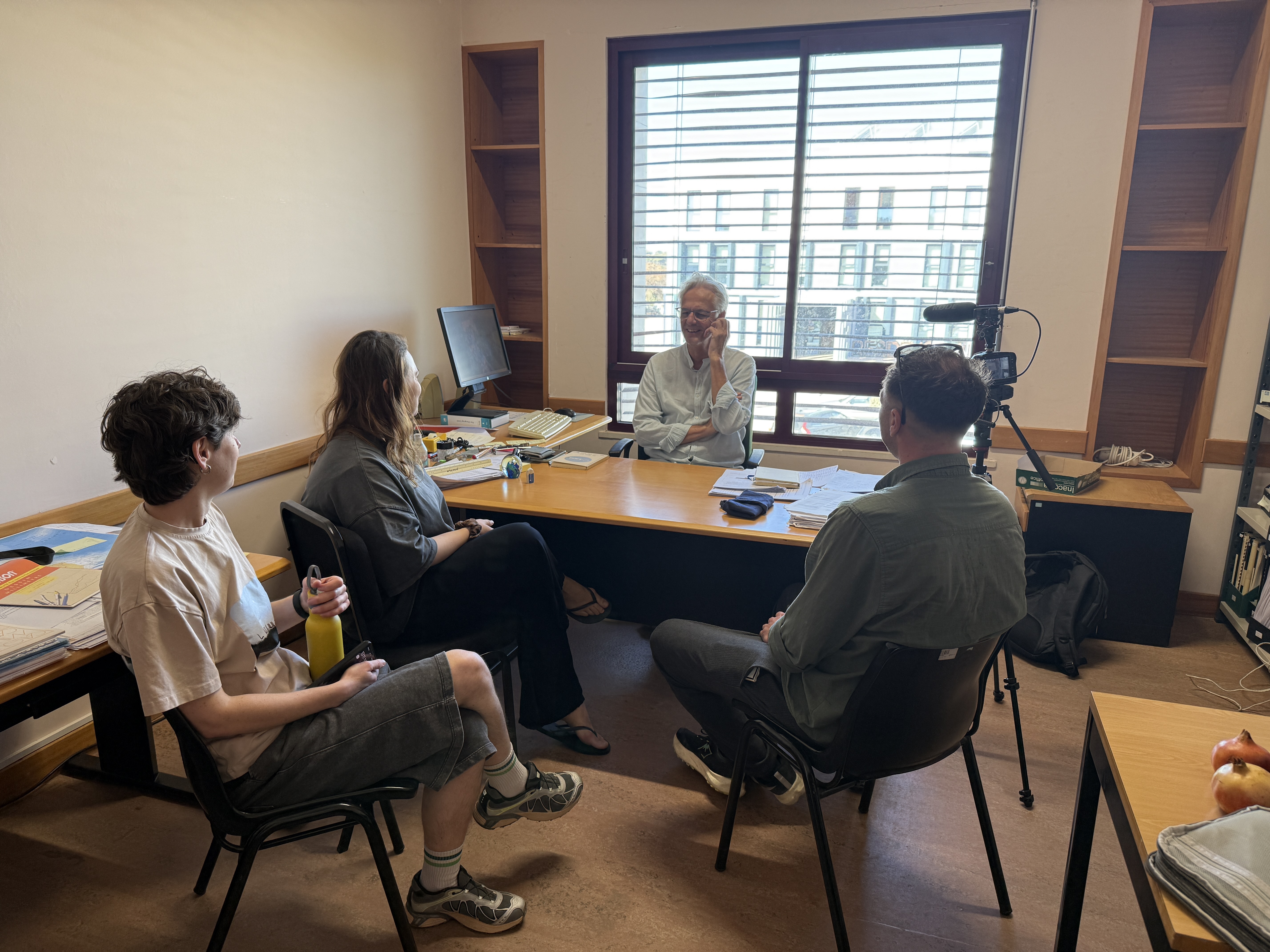
The following day, the artists had the opportunity to learn more about the scientific research being carried out in the area through two meetings with researchers from the University of Algarve. In the morning, they met with Óscar Ferreira, a researcher at the Centre for Marine and Environmental Research (CIMA), whose work focuses on coastal dynamics, coastal erosion and shoreline evolution, as well as the risks associated with coastal change. In the afternoon, they met with Rita Carrasco, also a researcher at CIMA, whose work focuses on coastal geomorphology, with particular interest in the dynamics, conservation and restoration of coastal ecosystems, especially salt marshes. These conversations helped the artists gain a better understanding of the natural processes shaping the Ria Formosa, the importance of its different habitats and the challenges involved in protecting them.
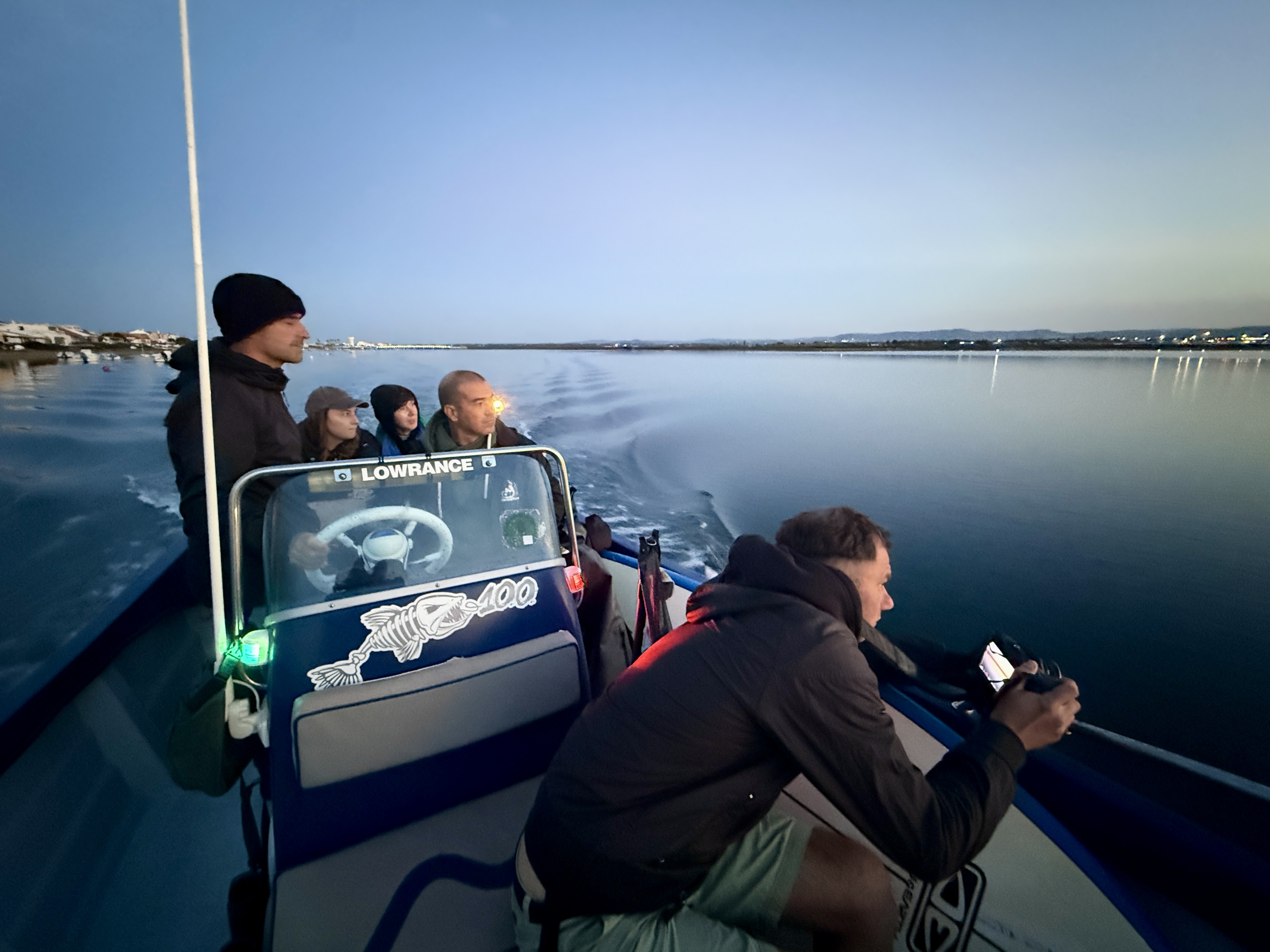
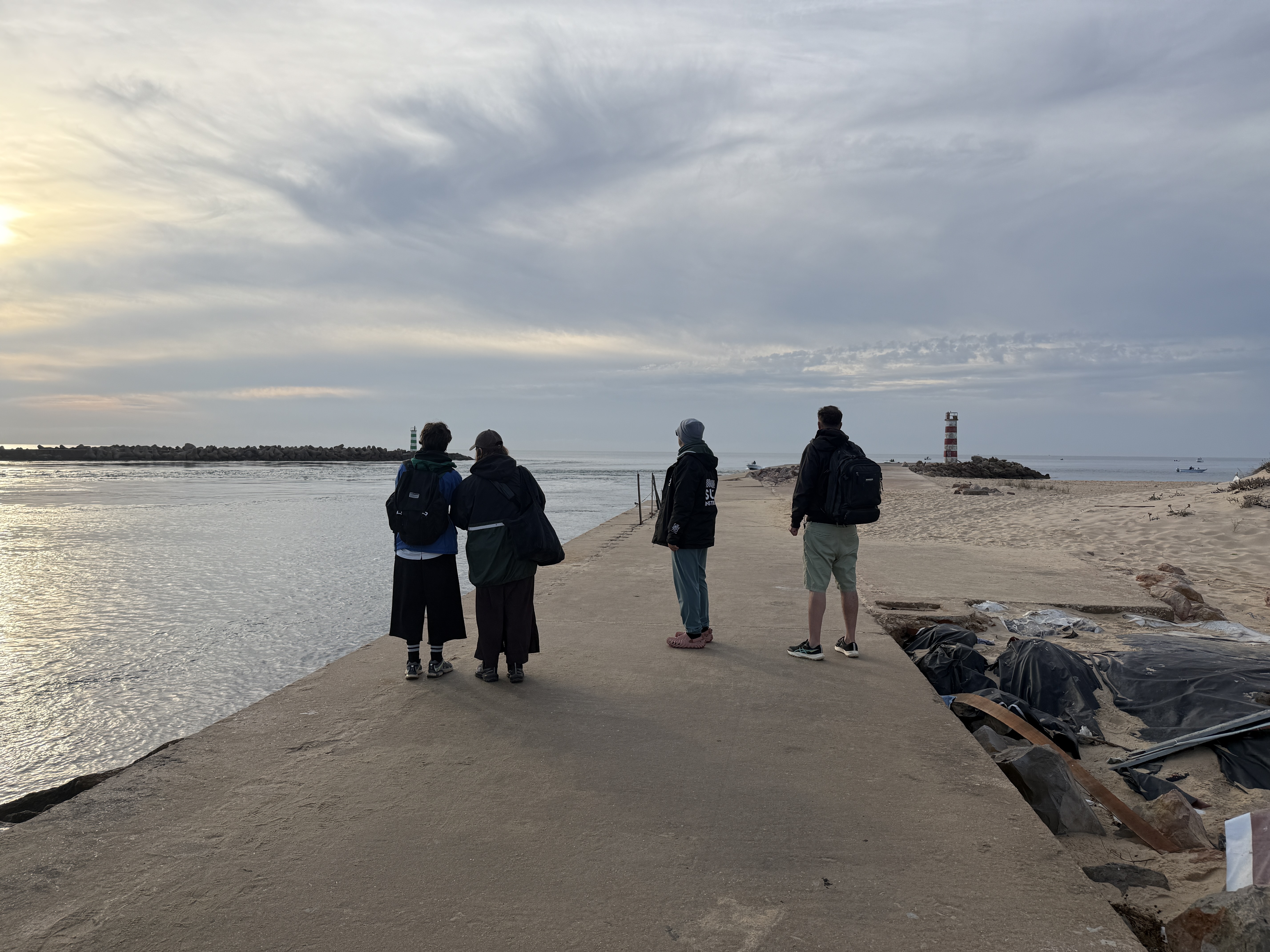
One of the highlights of the residency was a boat trip through the Ria Formosa, which started early in the morning, at 6:00 am, from Praia de Faro. The trip offered the opportunity to watch the sunrise over the Ria and observe the ecosystem from a different perspective. Along the way, there was an opportunity to stop and talk to two men in their eighties who were working in traditional sand extraction, an activity with a long history in the Ria Formosa. The conversation provided insight into this practice and the working methods they continue to use, which have been passed down and maintained over several generations.
The journey continued to Barrinha, where the lagoon meets the sea, before heading towards the open sea along the barrier islands, where the artists could observe the surrounding marine ecosystem. During the trip, they also had the opportunity to spot a group of approximately 30 dolphins. The visit included stops at different islands within the Ria Formosa, namely Ilha Deserta and Ilha da Culatra, where the artists were able to learn more about local life and enjoy traditional cuisine, with a lunch featuring locally sourced fish and seafood.
Throughout the trip, the artists also observed different professional activities that depend directly on the Ria, including fishing, aquaculture, oyster farming and shellfish harvesting. They also visited an oyster farm, where they learned more about production methods and the importance of these activities to the local economy.
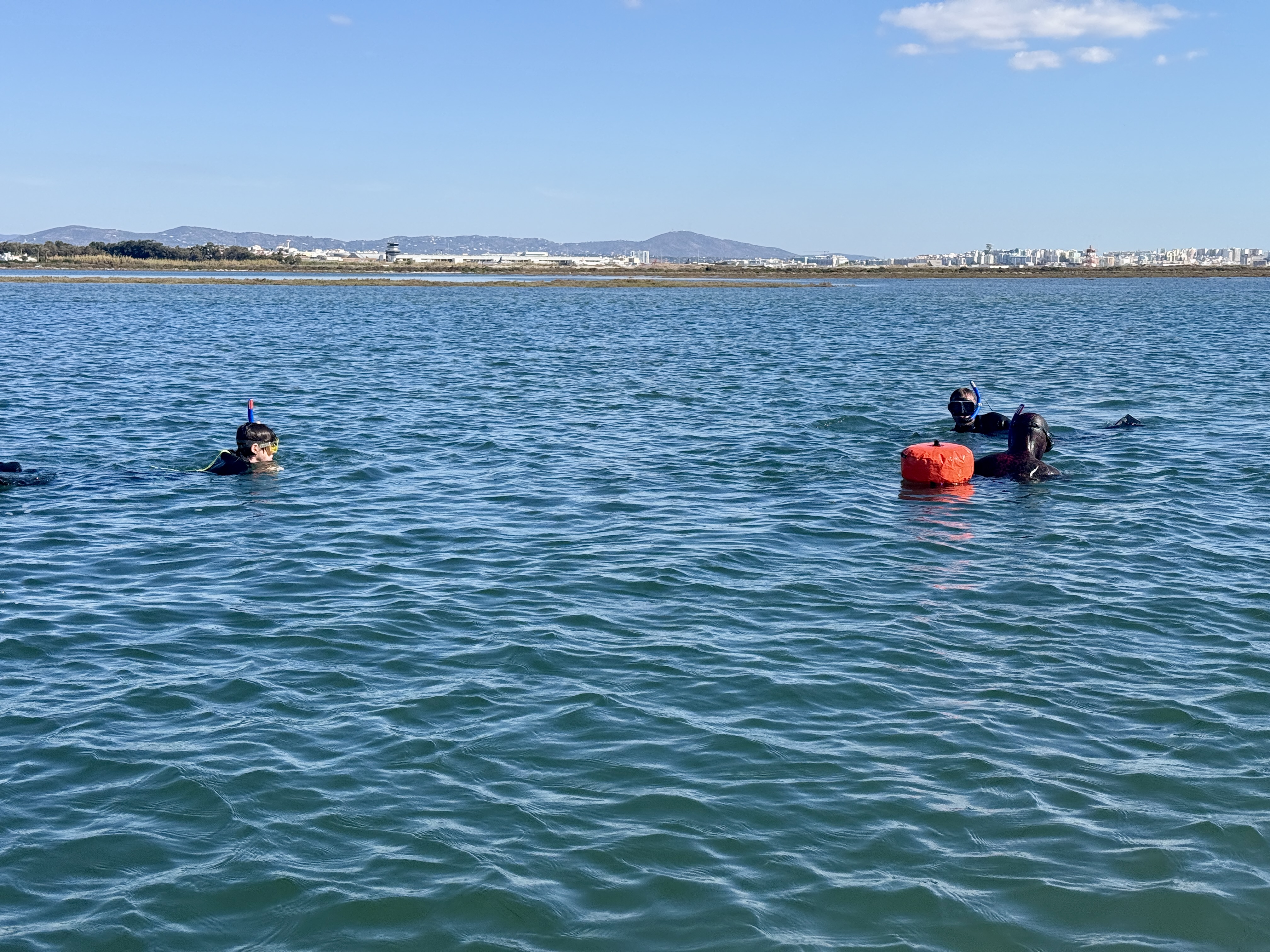
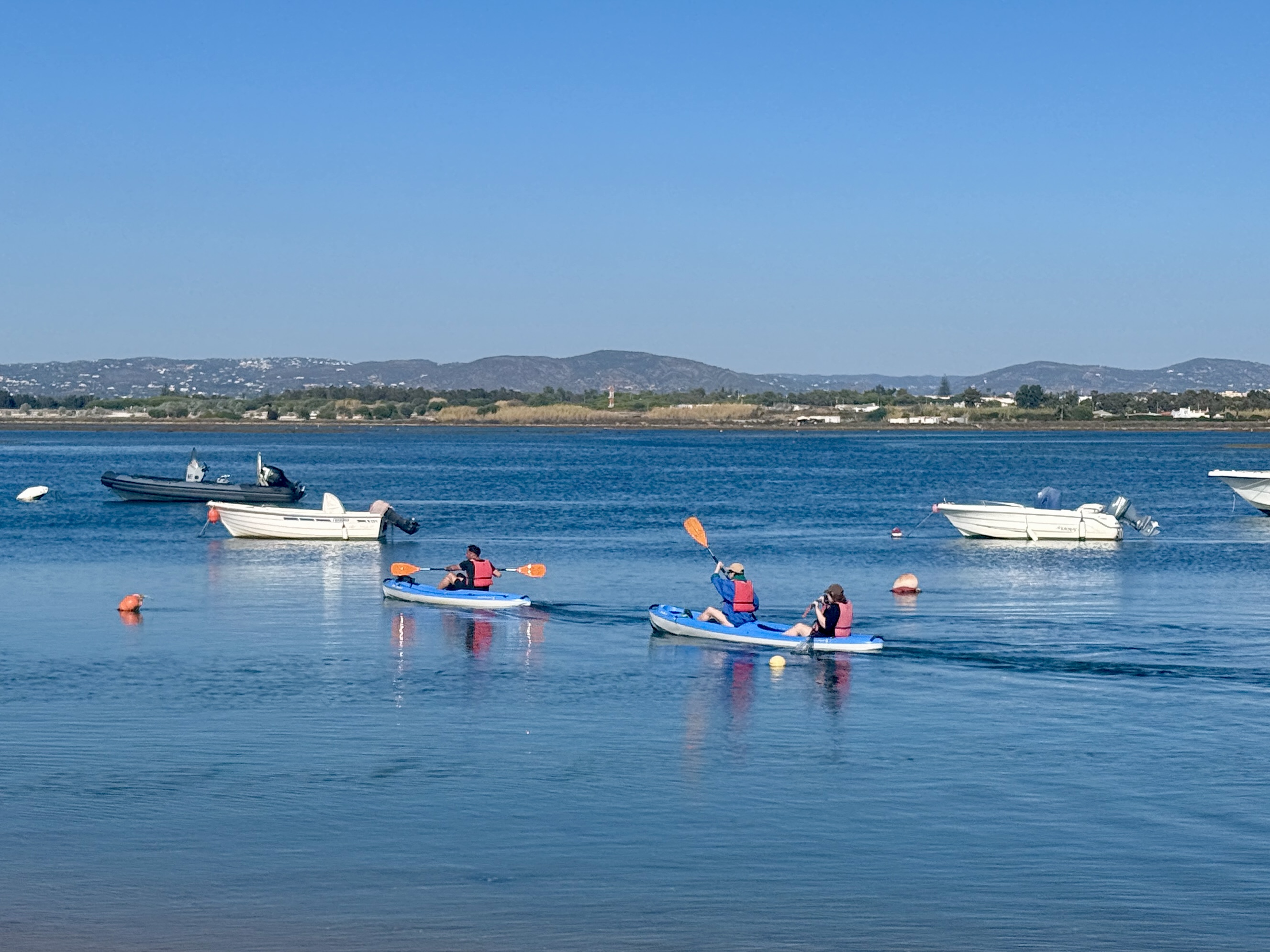
Another experience offered to the artists was an activity with the Restore SeaGrass project, dedicated to the conservation and restoration of seagrass meadows in the Ria Formosa. During the morning, they had the opportunity to dive in the Ria, accompanied by specialists in this field, allowing them to observe the seagrass directly and learn about its importance to the ecosystem. They also followed the researchers’ fieldwork, particularly the monitoring activities and the recording of progress in areas where seagrass had been planted. In the afternoon, the artists explored the lagoon’s channels on a kayak trip in the area surrounding Praia de Faro, discovering other parts of the lagoon and experiencing the landscape from the water.
The programme also included a guided visit to Salinas do Grelha, in Olhão, a salt production site that continues to use traditional, artisanal methods without industrial machinery. During the visit, the artists learned about the different stages of salt production and how this activity is connected to the natural conditions of the Ria Formosa, discovering another traditional practice that remains an important part of the area’s identity.
The final week of the residency was dedicated to the artists’ independent exploration of the Ria Formosa, giving them time to revisit places of interest, pursue their research and collect materials and references to support the development of their artistic work.
Overall, the residency was a very positive and valuable experience for both artists and their work. It provided them with the opportunity to discover the Ria Formosa through direct and immersive experiences, engage with different perspectives and realities, and find inspiration in the landscape, its ecosystems and the people who live and work there.